Double cleansing: what it is, how to do it, and when to skip it
If you spend any time on skin care socials, you’ve probably seen people rave about the "double cleansing method." At its core, double cleansing simply means washing your face twice in a row with two different types of cleansers. The first step helps lift away whatever has built up on your skin throughout the day, whether that's makeup, sunscreen, sweat, pollution or excess oil. The second step gives your skin a gentle, thorough wash so it feels fresh and comfortable. [8]
This article will break down what double cleansing really is, who might benefit, and how to build a routine that’s gentle and dermatologist-approved [5][7]. You’ll also learn when it might be better to scale back or skip double cleansing so you can protect your skin barrier and avoid over-washing. [2][3][4][6]
Keep in mind, double cleansing is optional. Many people do well with a single gentle cleanse. The goal isn’t to follow every trend but instead to find a routine that works for your skin that keeps it clean and comfortable.
Double cleansing: Key takeaways
What it is: Washing your face twice—first with an oil-based or micellar cleanser, then with a gentle water-based cleanser [1][2][8]
Why it matters: Helps remove makeup, sunscreen, and impurities more thoroughly
Who it’s best for: People who wear long-wear or waterproof makeup, layer on water-resistant sunscreen, sweat often, live in polluted environments, or simply feel like one cleanse doesn’t leave their skin fresh enough.
When to skip or scale back: People with very sensitive, dry, eczema-prone, or rosacea-prone skin may do better with one gentle cleanse once or twice a day. Scale back if your skin feels tight, dry, or irritated.
What is double cleansing?
Double cleansing is a cleansing routine where you wash your face twice in a row using two different types of cleansers. The idea is to give oil-based products and surface debris their own removal step and then give your skin a gentle wash. [8]
Double cleansing is completely optional, what matters most is choosing a routine that feels good for your skin's needs and just one way to build a dermatologist-aligned cleansing routine [5][7][8].
Benefits of double cleansing
When done with gentle products and not overdone, double cleansing may offer some nice benefits. Results vary from person to person and are not guaranteed, but here’s what many people notice:
More thorough removal of makeup and sunscreen: Water resistant sunscreens and long-wear makeup are designed to stay put. That’s great for your look—but not so great for easy removal. Starting with an oil-based cleanser helps break down stubborn products before you wash your skin. In fact, one clinical trial showed cleansing oils remove waterproof sunscreen better than water or foaming cleansers alone.[1]
Less leftover residue: Ever notice makeup or tint on your towel after washing? Double cleansing can help. The first step dissolves oil-based products, and the second step sweeps away what’s left. This is consistent with how surfactants (the cleansing ingredients in your cleansers) are designed to remove sebum (the natural oil your skin produces) and soils from your skin without harsh scrubbing or stripping your skin barrier.[2]
A cleaner feeling surface for leave on products: Dermatologists often recommend applying serums and moisturizers to clean skin. [5][7] When double cleansing removes more buildup, some people feel their products go on more evenly.
Who is double cleansing for?
As we mentioned earlier, double cleansing isn’t a must for everyone; it really depends on what’s on your skin and how clean it feels after washing.
You may want to consider double cleansing if:
You wear long-wear or waterproof makeup and water-resistant sunscreen. If you often notice leftover product after washing, starting with an oil-based cleanser or micellar water can help loosen these layers before your main cleanse [1][8]
You have oilier or acne-prone skin and layer on sunscreen and makeup. If one gentle cleanse doesn’t feel like enough, dermatologists say a two-step cleanse can help, as long as both products are mild. [8]
You may not need a double cleansing routine if:
You wear little or no makeup and use non-water-resistant sunscreen. If your skin already feels clean and comfortable after one gentle cleanse, there’s no need to add an extra step. [5][7][8]
Your skin is very dry or easily irritated. If washing leaves your skin tight or uncomfortable, dermatologists recommend sticking with mild cleansers and avoiding additional steps. [2][3][5]
A “listen to your skin” approach is important. The American Academy of Dermatology (AAD) suggests washing your face with a gentle cleanser twice a day and after sweating using your fingertips rather than scrubbing. [5] If adding a second cleanse makes your skin sting, feel tight, or look flaky, it’s a sign to simplify. [4][5][6] Over-washing and scrubbing can irritate the skin and can even make acne worse. [6][7]
How to double cleanse
If you decide to try a double cleansing method, it usually works best as part of your evening routine when you’re removing the day’s sunscreen, makeup, and buildup. [5][7]
Step 1: First cleanse (remove) on dry skin
Start with clean hands. Use a makeup remover wipe or apply an oil-based cleanser, cleansing balm, or micellar water to dry skin as directed.
Oils and balms are often massaged in with the fingertips.
Micellar water is usually applied to a soft cotton pad and gently swiped over the skin.
Gently massage or swipe to help dissolve makeup and sunscreen, focusing on areas with long-wear products like the eyes and lips.
Avoid tugging, rubbing, or harsh pressure, especially around the eyes. [1][2][8]
Step 2: Rinse or gently remove
If you’re using an oil-based cleanser or balm, add a splash of lukewarm water while massaging. This helps turn the cleanser into a light, milky texture so it rinses off easily—without leaving a greasy feel. If you’re using micellar water, simply wipe it away with a soft cotton pad. Always avoid hot water and harsh scrubbing, which can dry or irritate your skin. [2][3][5]
Step 3: Second cleanse (wash)
Apply a small amount of a mild, gentle gel, cream, or lotion cleanser to damp skin. This step lifts away remaining residue, sweat, and surface dirt.
Massage in light circular motions with your fingertips
Rinse thoroughly with lukewarm water
Use mild cleansers over harsh soaps to help maintain your skin barrier [2][3][5]
Step 4: Dry and moisturize
Pat your face dry with a clean towel—don’t rub. Follow with a moisturizer and any treatments you use at night. In the morning, apply a broad-spectrum sunscreen as part of your routine.
How often should you double cleanse?
Most people do well washing their face about twice a day—once in the morning, once at night, and after sweating. That’s the guidance from dermatologists and the American Academy of Dermatology. [5]
If you choose to double cleanse, it usually makes sense to keep both cleansing steps within your evening routine. For example, you might double cleanse at night to remove sunscreen and makeup and use a single gentle cleanse in the morning. This keeps your overall washing frequency close to the recommended twice a day. [4][5][7]
More washing isn’t necessarily better. Studies have shown that the type of cleanser you use and how often you wash can affect your skin’s protective barrier and even trigger irritation, even when the formulas are mild. Guidance on acne care also warns that washing more often than recommended and scrubbing can irritate skin and worsen breakouts. [6][7] If you are unsure how often to cleanse or have ongoing irritation, talk with a dermatologist for advice.
What to use in a double cleansing routine
The cleansers you choose matter as much as the number of steps. A comfortable double cleansing routine usually pairs a gentle first-step product with a mild second-step cleanser that respects the skin barrier. Makeup remover wipes can also be a helpful add-on for breaking down stubborn makeup before you cleanse—just remember to keep your technique gentle.
Your first step products:
Cleansing oils and balms: These formulas melt away stubborn products when massaged onto dry skin before rinsing. Studies show cleansing oils remove waterproof sunscreen better than water or foaming cleansers.
Neutrogena® pick:
Makeup Melting Cleansing Balm (Fragrance-Free)— gentle and enriched with vitamin E for soft, conditioned skin.
Micellar water: Great for lighter makeup days or if you prefer a no-rinse option. Micelles act like magnets, attracting oil and debris when you swipe gently with a cotton pad. [2] Some people still follow with a water-based cleanser for sunscreen or layered products. [2][5]
Neutrogena® picks:
Hydro Boost Micellar Water — hydrates while removing makeup and impurities without harsh rubbing.
Your second step products:
Non stripping gel, cream, or milk cleanser: Choose a product that’s pH-balanced and formulated to protect your skin’s natural barrier. These cleansers use mild surfactant systems—cleansing ingredients that help water mix with oil and dirt so they rinse away easily.
Neutrogena® picks:
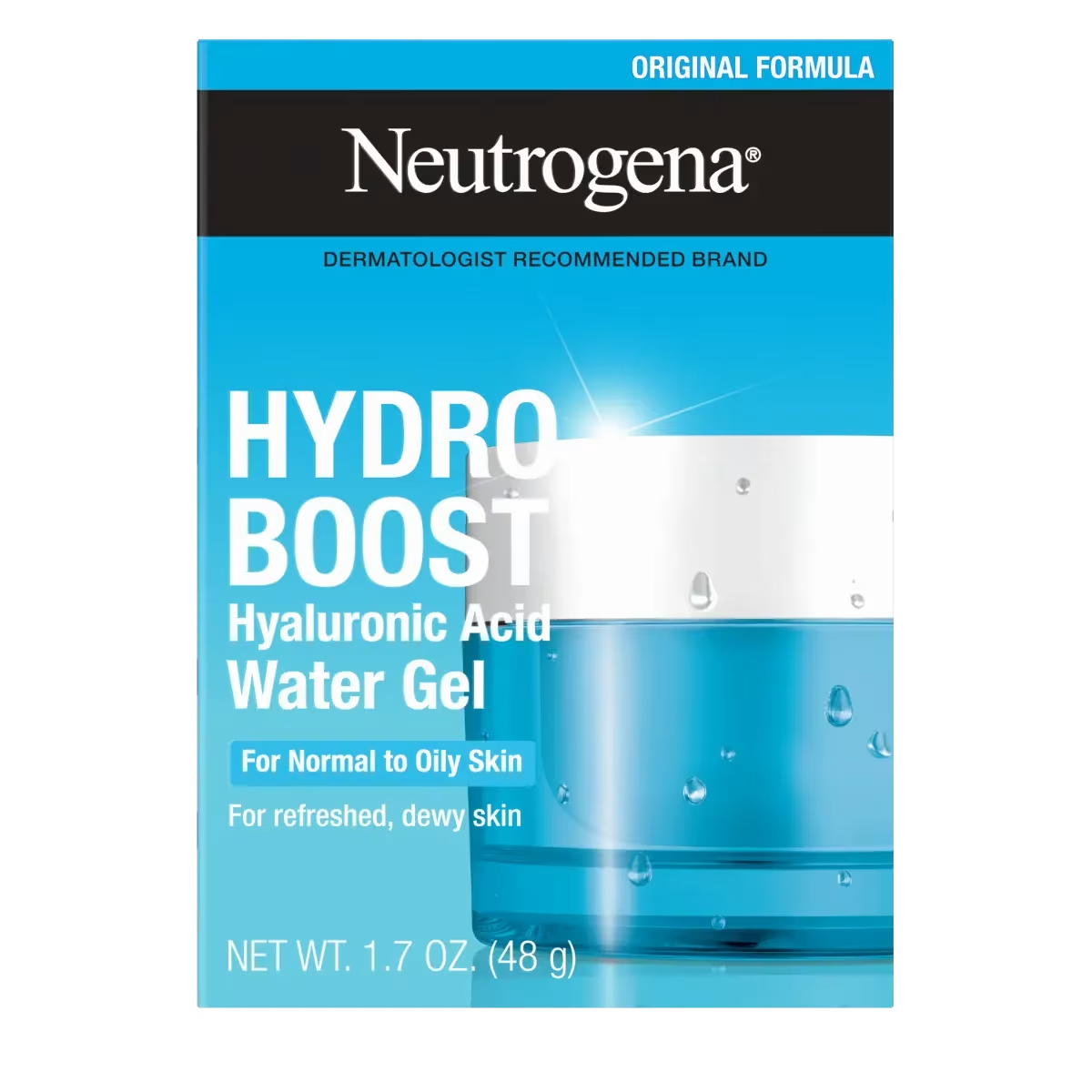
Hydro Boost Hydrating Gel Cleanser — lightweight and refreshing for normal to oily skin.
Ultra Gentle Hydrating Cream to Foam Cleanser — ideal for dry or sensitive skin.
When choosing your products:
Look for labels such as "fragrance free," "suitable for sensitive skin," "non comedogenic," and "pH balanced" when possible, especially if your skin is easily irritated. [2][5][7]
Some acne routines include acne cleansers with ingredients such as salicylic acid, but these should still be used in line with dermatologist guidance and overall skin tolerance. [2][3][7]
Skin type considerations
This simple guide can help you match double cleansing textures to common skin types. These are general suggestions and not strict rules.
Dry skin: Often does well with a creamy or milky second-step cleanser and a gentle oil or balm first step. Look for hydrating, barrier supporting formulas and avoid very foamy or high pH cleansers that can increase dryness.[2][3]
Normal skin: May tolerate a range of textures. Many people like a light oil or micellar water first step and a mild gel or cream cleanser second step, as long as the products do not leave their skin feeling tight. [2][3][5]
Combination skin: May benefit from a lightweight first step and a non-stripping gel or low foam cleanser that can remove oil in the T-zone without drying the cheeks. Gentle, pH balanced syndet cleansers are often a good fit. [2][3]
Oily or acne-prone skin: Often prefers lightweight gel cleansers as the second step. Some routines include acne-focused ingredients such as salicylic acid, but dermatology guidance still stresses gentle cleansing, avoiding over-washing, and using non comedogenic products. [2][6][7]
Sensitive skin: Typically needs fragrance free, non-foaming or low-foam cleansers labeled for sensitive skin. Both steps should be mild and free of common irritants whenever possible. [2][3][5]
Bottom line: Comfort matters more than the number of steps. If your skin feels tight, stings, or looks red, simplify and check with a dermatologist.
When to avoid or be cautious with double cleansing
Double cleansing is optional and may not suit everyone, especially if your skin barrier is already fragile.
It may be too much if:
Your skin is very dry or sensitive, especially if you’re using harsh cleansers, hot water, or rough cloths. [2][3][5]
You have eczema or rosacea, where the skin barrier is more reactive and extra cleansing can make irritation worse. [3][4][5]
Signs that you may be over-cleansing include:
Stinging or burning with cleansing products
Tightness that does not improve after moisturizing
New or increased flaking
More redness or sensitivity after washing
Research shows that how often you wash—and the type of cleanser you use—can impact your skin’s protective barrier, even with mild formulas. [2][4] AAD guidance also notes that washing the face more often than recommended and scrubbing can irritate the skin and worsen acne. [5][6][7]
If you notice these signs after adding a second cleanse, scale back to one gentle wash and see if your skin feels better. If irritation continues or you have a chronic condition like eczema, rosacea, or acne, check in with a board-certified dermatologist for personalized advice.
FAQs
References
1. Chen W, He J, Wang Y, et al. The optimal cleansing method for the removal of sunscreen: Water, cleanser or cleansing oil? J Cosmet Dermatol. 2020. Available from PubMed: https://pubmed.ncbi.nlm.nih.gov/31157512/
2. Mijaljica D, Spada F, Harrison IP. Skin Cleansing without or with Compromise: Soaps and Syndets. Molecules. 2022;27(6):2010. https://www.mdpi.com/1420-3049/27/6/2010
3. Ananthapadmanabhan KP, Moore DJ, Subramanyan K, Misra M, Meyer F. Cleansing without compromise: The impact of cleansers on the skin barrier and the technology of mild cleansing. Dermatol Ther. 2004. PDF accessed via Scientific Spectator.
4. Symanzik C, Küster D, Wiegand C, et al. Effects of skin washing frequency on the epidermal barrier function and inflammatory processes of the epidermis: An experimental study. Contact Dermatitis. 2022. https://pubmed.ncbi.nlm.nih.gov/35357722/
5. American Academy of Dermatology. Face washing 101. https://www.aad.org/public/everyday-care/skin-care-basics/care/face-washing-101
6. American Academy of Dermatology. 10 skin care habits that can worsen acne. https://www.aad.org/public/diseases/acne/skin-care/habits-stop
7. American Academy of Dermatology. Skin care for acne-prone skin. https://www.aad.org/public/diseases/acne/skin-care
8. Fasanella K. What You Need To Know About Double Cleansing, Per Dermatologists. Women’s Health. August 30, 2024. https://www.womenshealthmag.com/beauty/a61974107/what-is-double-cleansing/
9. American Academy of Dermatology. How to safely exfoliate at home. https://www.aad.org/public/everyday-care/skin-care-secrets/routine/safely-exfoliate-at-home